RTVE’s decision at the turn of 2025 and 2026 to withdraw from the Eurovision Song Contest 2026 shocked the European public. Spain faced a massive challenge: what to do with a format that for years had served solely as a national selection? The answer arrived in February 2026 on the stage of the Palau d’Esports l’Illa de Benidorm. The festival not only survived without its Eurovision umbilical cord but proved it could generate hits with global potential on its own terms.
Today, in July 2026, the Spanish public broadcaster is seizing the momentum. Preparations for Benidorm Fest 2027 are in full swing, and the ongoing submission window has been officially extended. It is the perfect moment to look at how this unique format is redefining the Spanish music industry and what we can expect from the upcoming edition.
When the duo Tony Grox and Lucycalys triumphed in February 2026 with their energetic track “T amaré”, it was clear that missing out on the Eurovision stage had not dampened their momentum. Although the winners did not represent the country in the international contest, they received unprecedented rewards. Thanks to a strategic partnership between RTVE and the American network Univision, the duo earned a unique opportunity to travel to Miami to record a track with Tainy—one of the most influential Latin music producers in the world, known for his work with superstars like Bad Bunny and J Balvin.
Meanwhile, the runner-up and winner of the Spotify Award, ASHA, traveled to Stockholm for a dedicated recording session as her prize. The festival recorded all-time high viewership on television and streaming platforms, proving that the Spanish music industry views Benidorm as a prestigious promotional platform rather than just a preliminary round for a foreign contest. Shifting the focus from television glitz to composition and tangible career support attracted creators who had previously avoided the selection process out of fear of international results pressure.
Currently, the attention of the Spanish music sector is focused on the submission window for the festival’s sixth edition, set to take place in early 2027. To give composers and artists more time to fine-tune their entries, RTVE officially extended the final submission deadline from July 12 to July 30, 2026.
Interestingly, the 2027 rules published by the broadcaster deliberately omit any direct references to the Eurovision Song Contest 2027. RTVE representatives emphasize that while the festival has Eurovision in its DNA, it has already developed a completely independent life. Next year’s winner will only represent Spain in Europe if the broadcaster decides to return to the contest, which remains an open question for now.
This strategic flexibility allows artistic director Sergio Jaén and the entire production team to focus solely on musical quality and genre diversity. Preparations for the 2027 edition also include the fifth iteration of the famous “Songwriting Camp”—a songwriting workshop that has become an incubator for some of the catchiest Spanish melodies in recent years.
The transformation of the festival is also a massive triumph for Benidorm itself. The authorities of the Valencian Community and the city council have signed an agreement guaranteeing that the event will be hosted in the city until at least 2028.
The local economy views the festival as an excellent tool to combat tourism seasonality. Although the main concerts take place in February, the year-round preparations, promotion, and side events draw tourists, journalists, and talent scouts. Benidorm is successfully building its image as a Mediterranean capital of premium music, moving away from its old reputation as a resort catering exclusively to mass, budget tourism.
Planning to experience the energy of this massive musical celebration in person? Below you will find key, proven information to help you plan your trip for the upcoming edition in February 2027.
Concert events traditionally span a full week, culminating in early February 2027:
Tuesday: First Semi-Final (9 acts, 6 advance to the final)
Thursday: Second Semi-Final (9 acts, 6 advance to the final)
Saturday: Grand Final (12 acts competing for the trophy)
The official Benidorm Music Week kicks off on the Sunday preceding the semi-finals, offering free outdoor concerts and artist meet-and-greets across the city.
Ticket distribution for the three main live shows at the Palau Municipal d’Esports l’Illa de Benidorm is handled through RTVE’s official ticketing platform.
When to buy: Ticket sales usually launch in late November or December. Information regarding the exact date is published just a few days prior, and ticket pools sell out within minutes.
Estimated prices: Semi-final tickets range between €40–€60, while grand final tickets cost from €60 to €90.
Ticket-free alternative (EuroClub): For those unable to secure seats at the Palau, the city organizes official EuroClub fan zones. These are outdoor or club venues featuring giant screens broadcasting the live shows, followed by after-parties with festival participants and guest DJs.
Traveling to Benidorm from abroad is relatively straightforward, provided you plan well in advance.
Flights: The best transit hub is Alicante-Elche Airport (ALC), located about 60 km from the city. The airport handles numerous direct flights from Poland and across Europe.
Getting to the city: Comfortable ALSA buses run directly from the Alicante airport terminal. The journey takes around 45 minutes, and a one-way ticket costs approximately €10. Alternatively, you can take the scenic TRAM narrow-gauge railway from downtown Alicante.
Accommodation: Despite Benidorm’s massive hotel capacity, accommodations near Levante Beach and the sports arena itself reach near-full occupancy during the festival week. It is best to book your stay by autumn.

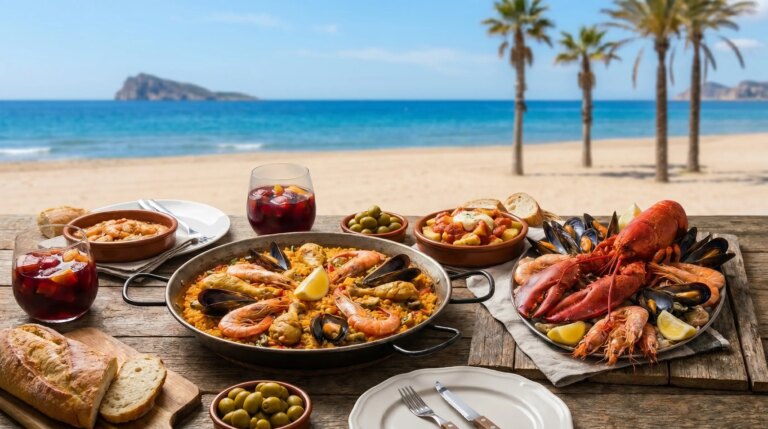
A unique attraction combining music with gastronomy is the city-wide TapaFest competition. Throughout the festival week, dozens of restaurants in Benidorm prepare unique, signature tapas dedicated to specific artists and songs competing in the festival. Residents and tourists can sample these miniature culinary works of art for a small fee (usually bundled with a local drink) and vote for their favorite via a dedicated app.