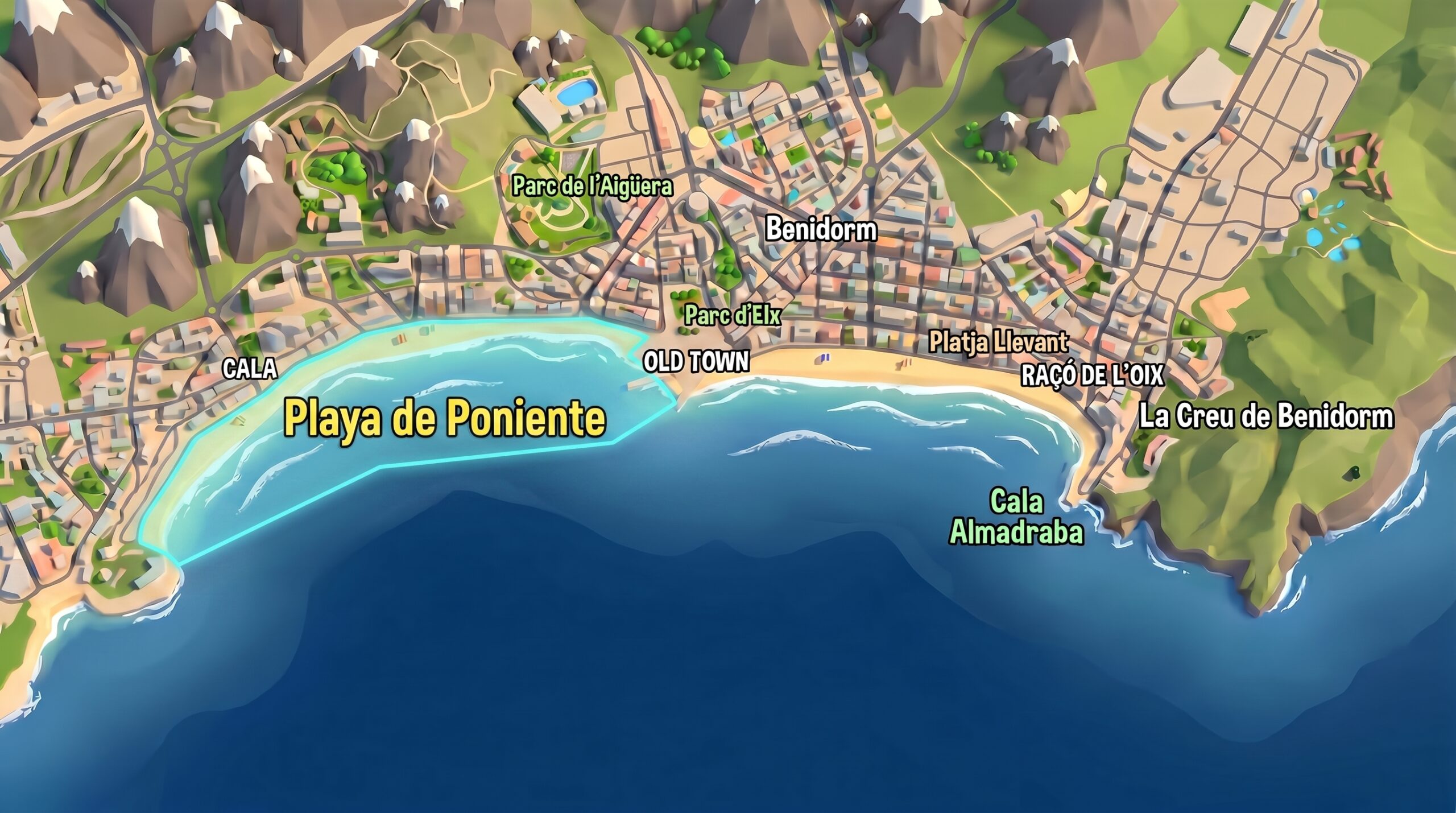
Benidorm, a city that has earned the title of the “Manhattan of Spain” thanks to its architecture—unique in Europe for its soaring heights—and its dense grove of skyscrapers, often appears in the public imagination as the epicenter of an endless fiesta. For many tourists, a holiday here is synonymous with lively bars, loud nightclubs, and the always crowded, energy-pulsing Levante Beach. However, one only needs to cross the symbolic strip dividing the city to discover, on the western side of the historical Old Town, a completely different dimension of Mediterranean relaxation – Playa de Poniente. It is the longest and most majestic beach in Benidorm, serving as a true oasis of peace. It offers not only vast space and crystal-clear sand but also modern design and an intimate atmosphere, becoming the ideal alternative for those who wish to combine metropolitan luxury with restorative relaxation in a “slow life” style.
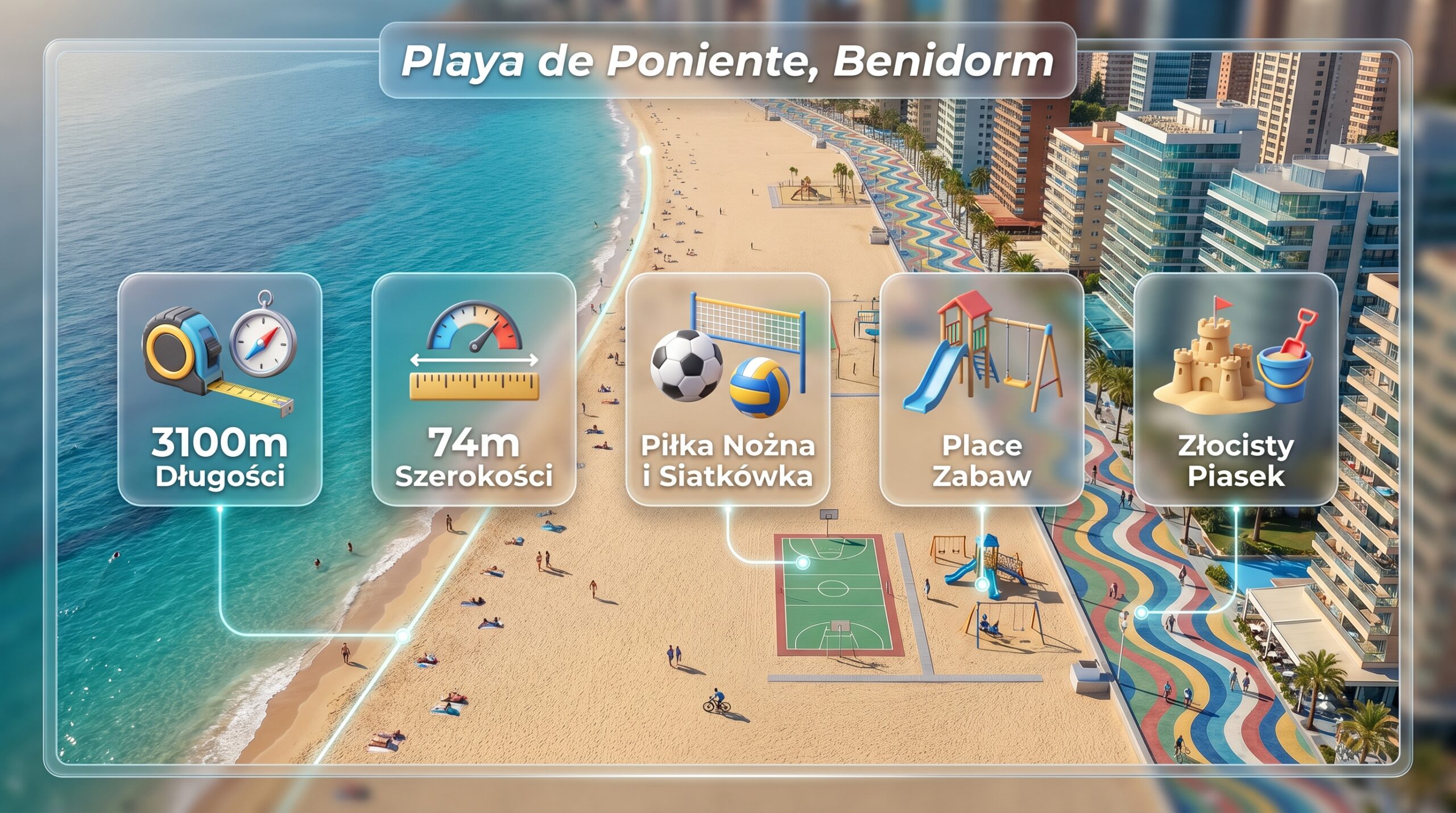
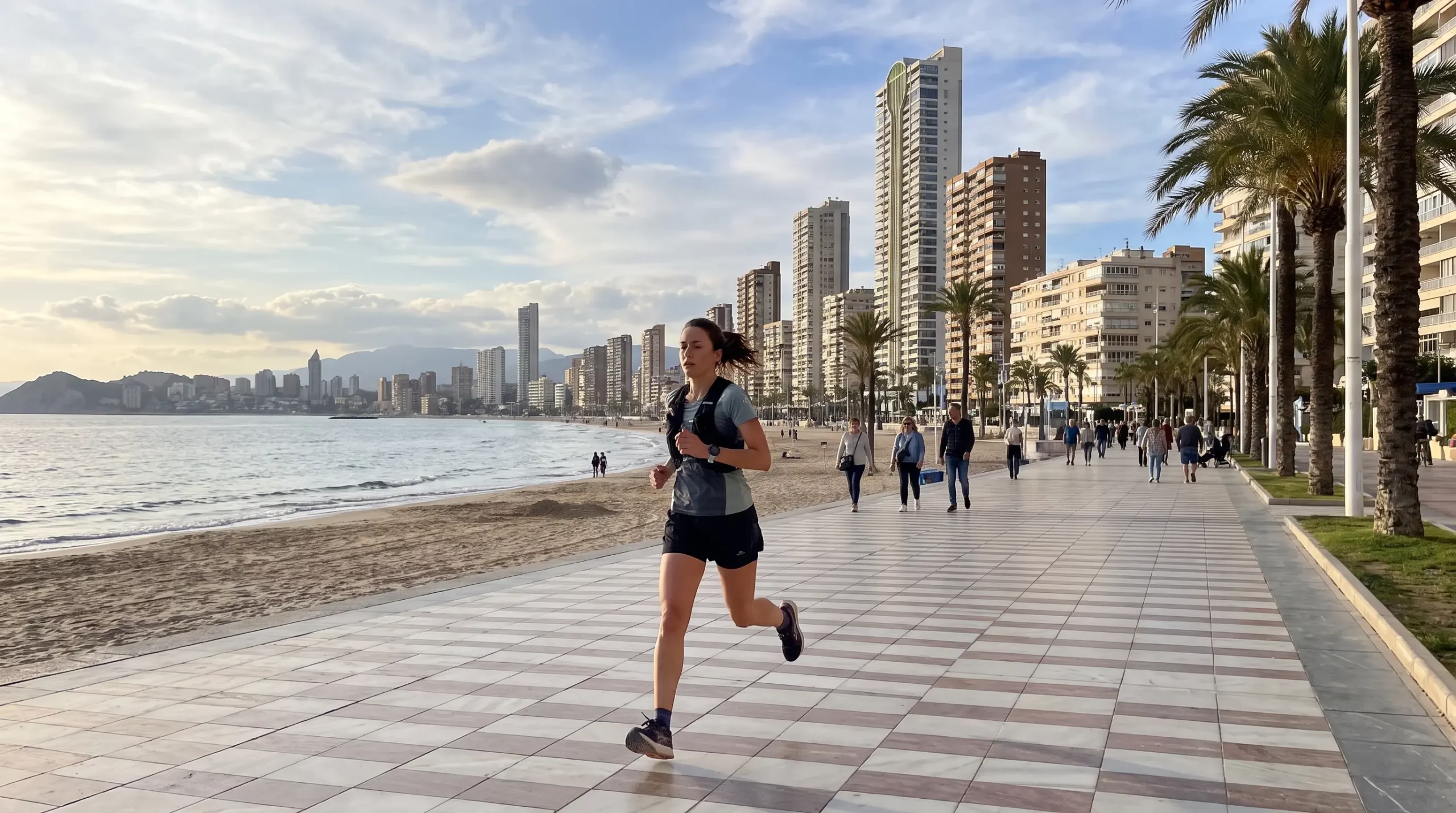
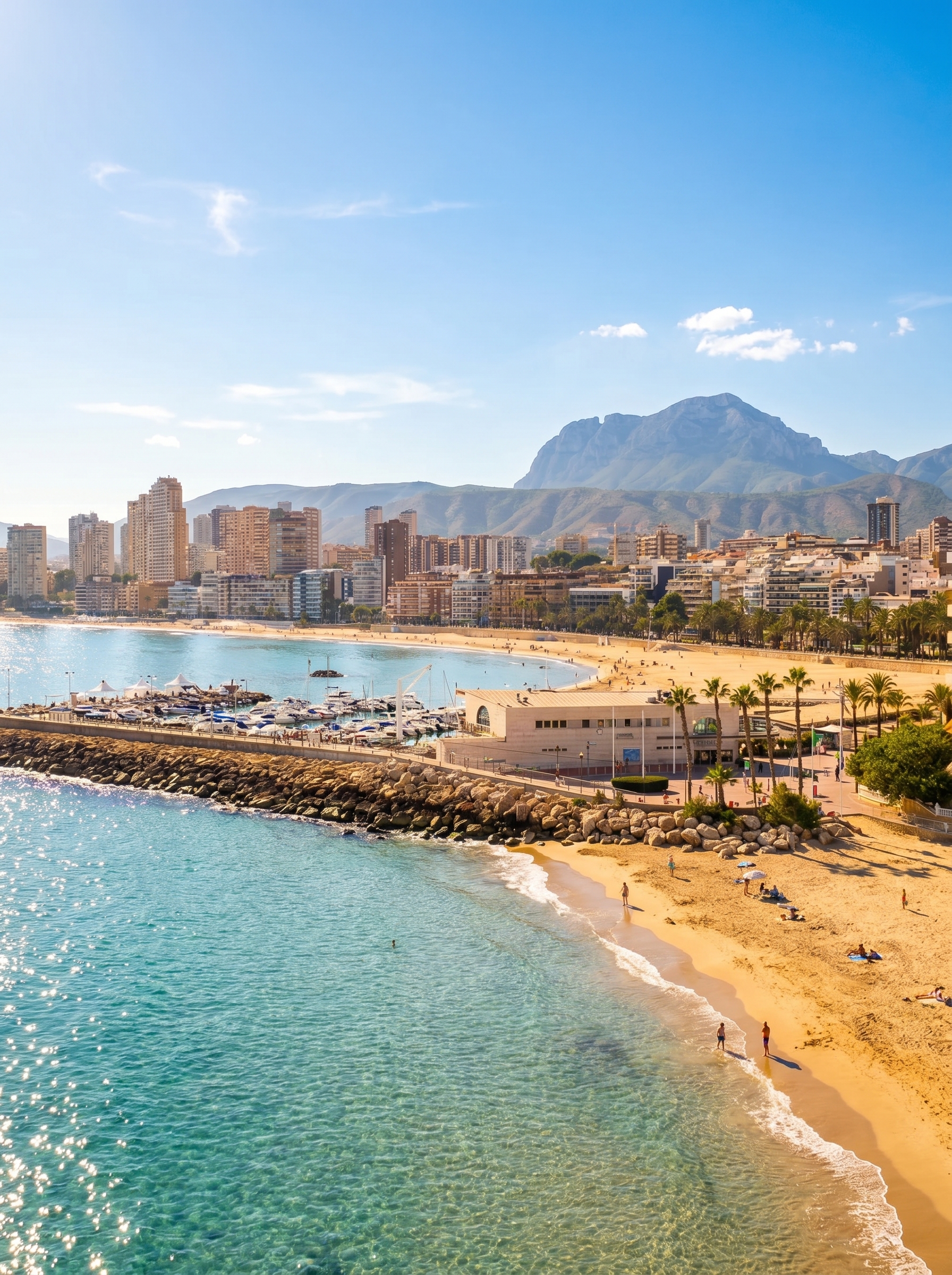
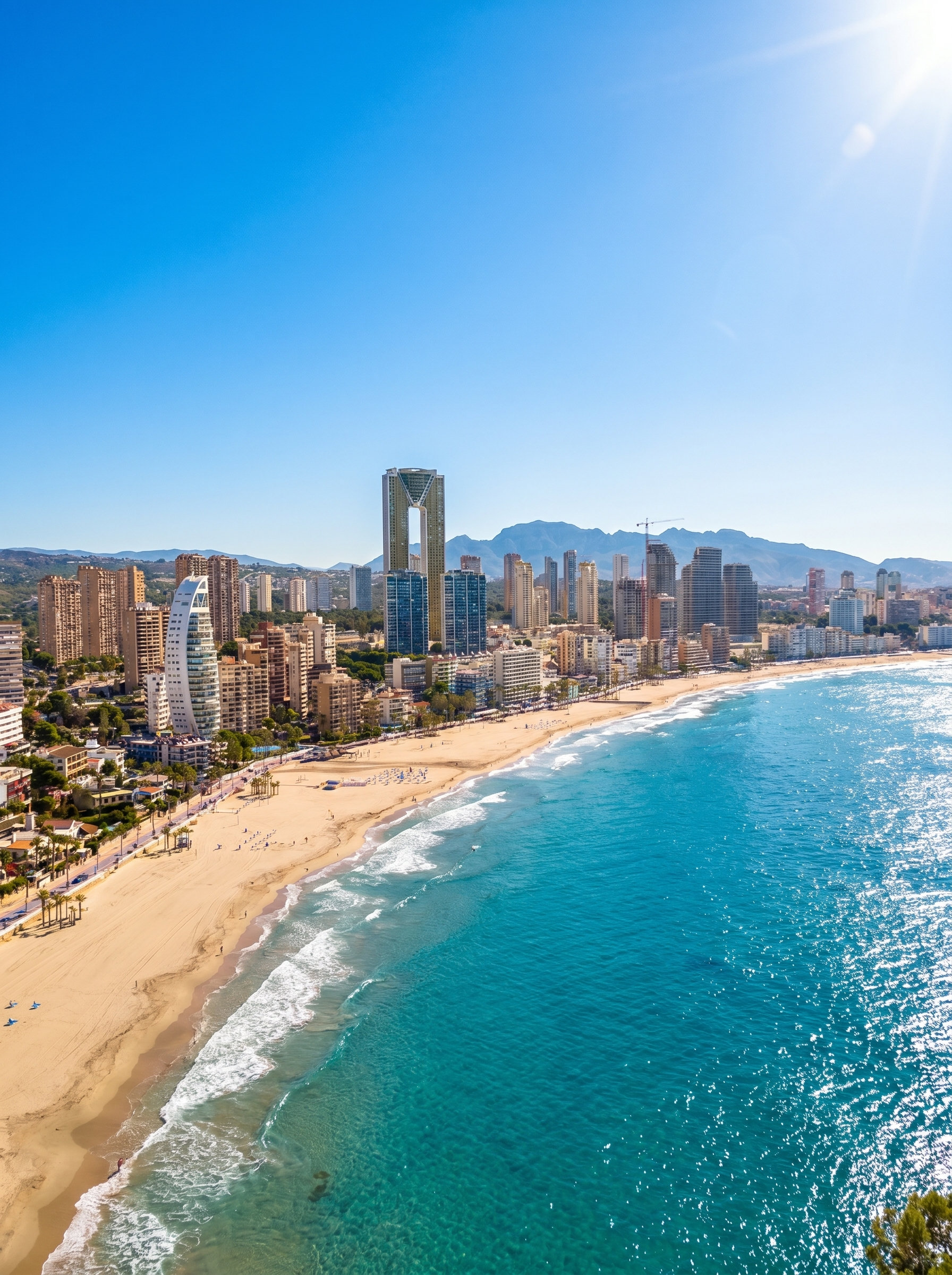
Poniente Beach stretches over an impressive length of over 3 kilometers, serving as a monumental extension of the western part of the city. Its course begins at the bustling marina, located at the foot of the historical Old Town and the picturesque Balcón del Mediterráneo viewpoint, and ends at a quiet headland in the scenic bay of La Cala. What sets Poniente apart from other European urban beaches is its extraordinary width – in many places, the strip of sand measures up to 100 meters. Such a scale means that even in the heart of sweltering August, when tourism reaches its peak, beachgoers can enjoy a sense of freedom and intimacy. This space allows for easy breathing and relaxation without the need to reserve a spot at dawn or fight for every inch of sand.
The sand on Poniente is a true pride of the region: it is fine, with a deep golden hue and an almost silky structure that invites long barefoot walks along the shore. Its impeccable condition is maintained by specialized technical teams that mechanically sift and clean the entire coastline every night. It is therefore no surprise that the beach has continuously received the prestigious Blue Flag award for decades. For tourists, this international certification is a guarantee not only of sterile sand cleanliness but, above all, of the highest microbiological water parameters and exemplary organization of rescue services.
The sea in this part of the bay is characterized by exceptional clarity and a very gentle, almost unnoticeable slope of the bottom. The absence of sudden drops and strong coastal currents makes Poniente a natural choice for families with small children, who can safely play in shallow water, as well as for seniors or less skilled swimmers who value comfortable and predictable conditions for sea bathing. An additional advantage is the soothing sound of the waves, which, thanks to the distance from the loudest entertainment centers, allows for true tranquility.
One of the most recognizable elements of this part of Benidorm is not the beach itself, but its promenade (Paseo Marítimo). Designed by the eminent architectural duo – Carlos Ferrater and Xavier Martí Galí from the OAB (Office of Architecture in Barcelona) studio – it was opened in 2009. Since then, it has become a global icon of modern design, winning numerous prestigious awards, including a distinction at the World Architecture Festival.
The concept of the promenade is based on a fascination with organic geometry. Its structure is not linear but mimics the natural shapes of sea waves, cliffs, and dunes, creating a smooth transition between the urban fabric and the endless Mediterranean Sea. The entire construction consists of interlocking layers located at different levels:
The multicolored mosaic surface of the promenade is another element worthy of note. Specially hardened ceramic tiles were used, whose colors – ranging from pure white through sunny yellows and succulent greens to deep blues – are intended to “blur” the boundary between land and water. Depending on the time of day and the intensity of the Spanish sun, the promenade shimmers with different colors, creating a dynamic visual spectacle. It is not just a communication route but a functional sculpture and an open-air art gallery that has completely transformed the aesthetics of the western part of Benidorm, giving it a luxurious and futuristic character.
Although both beaches share the same bay, their characteristics mean they attract completely different audiences:
Poniente Beach is modelly prepared to receive guests, offering a comprehensive range of services that raise the comfort of rest to world standards. Every aspect of the infrastructure has been thought out to satisfy the needs of different age groups.
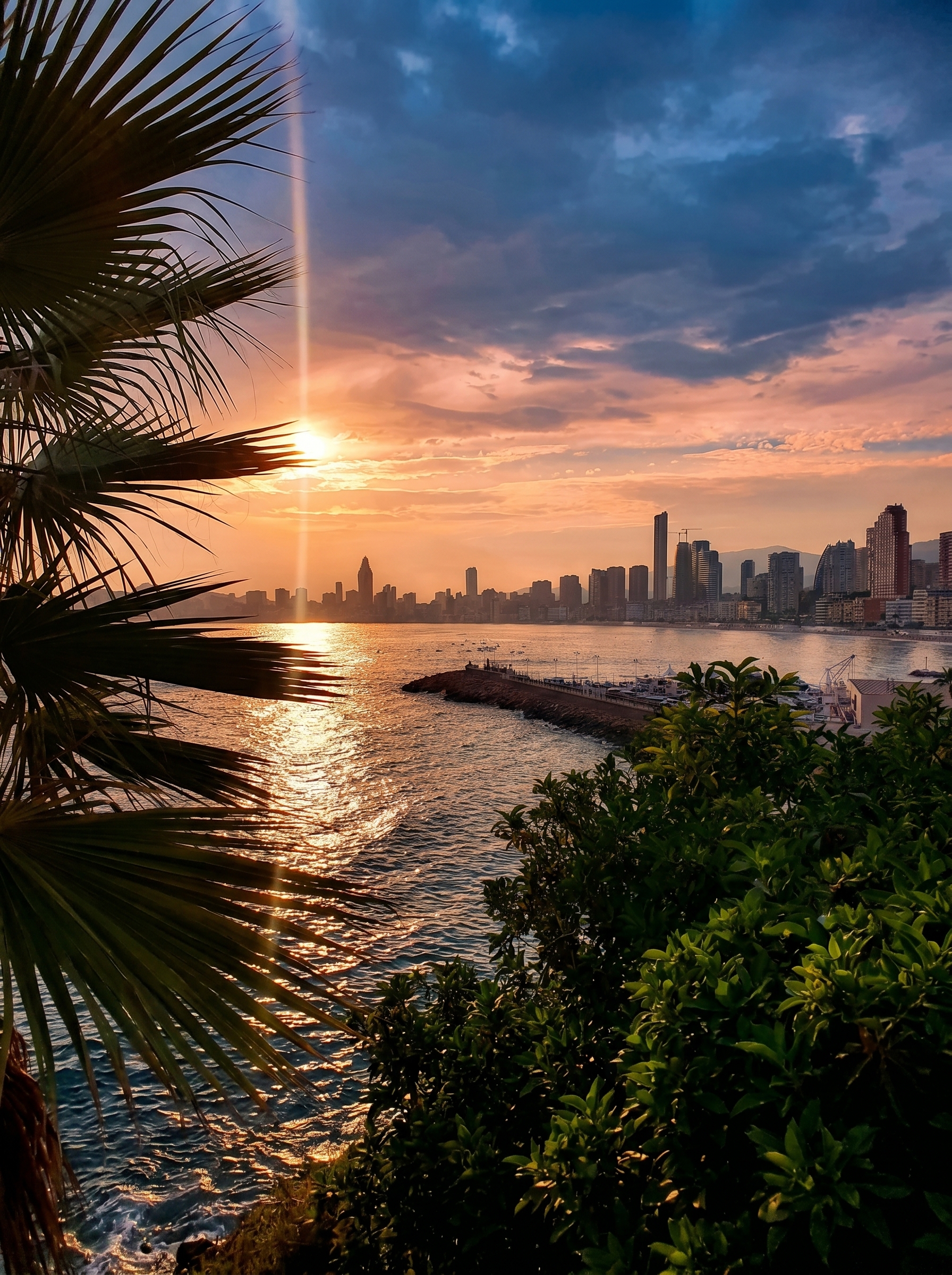
Walking along Poniente, it’s impossible to miss the impressive buildings that define the modern landscape of Benidorm. The undisputed star of architecture here is Intempo – one of the tallest residential buildings in Europe, rising to a height of almost 200 meters. Its unique silhouette in the shape of two towers connected at the top by a giant golden cone (often called the “diamond”), has become a new symbol of the city’s prestige. Inside are luxury apartments and Europe’s highest wellness area with infinity pools and viewing terraces that offer residents almost surreal visual experiences.
At the eastern end of the beach, right on the border with the Old Town, lies Parque de Elche, known locally as the “Pigeon Park” (Parque de las Palomas). It is a green enclave filled with soaring date palms that has served as the main meeting place for residents for decades. The central fountain and numerous shaded benches offer respite from the midday sun, and the park itself constitutes a natural, representative gateway leading to the marina and the labyrinth of narrow streets of the Casco Antiguo.
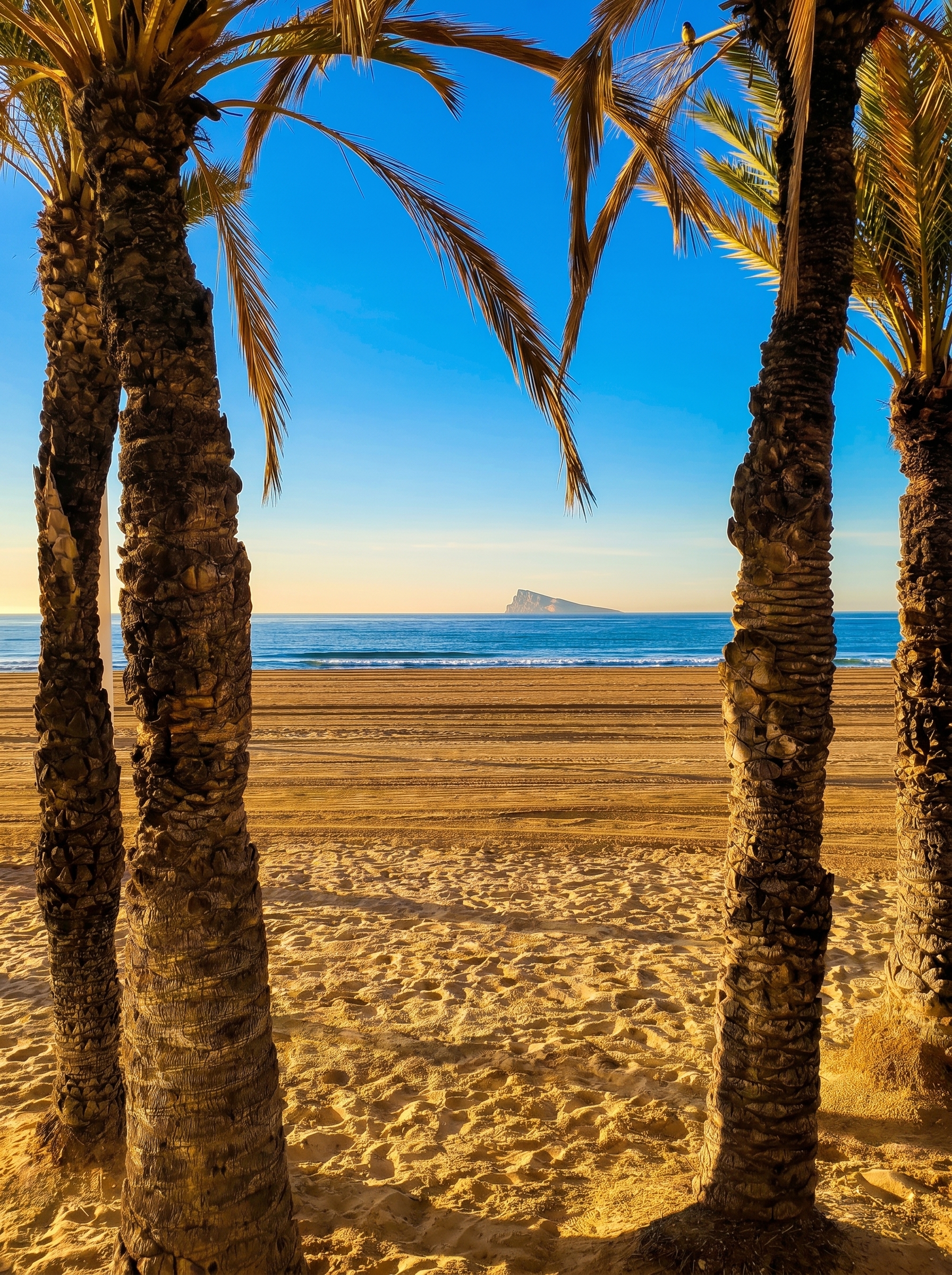
On the opposite, western end of the bay, it’s worth climbing the Tossal de la Cala hill. It is a place of great historical importance – there are carefully preserved remains of a Roman castellum (fortification) from the 1st century BC, discovered during archaeological works. The recent revitalization of this area has enabled tourists to safely visit the excavations and learn about the military past of the region. However, what attracts visitors here most is the viewing terrace. It offers a breathtaking panorama: from the blue waters of the bay, through the entire length of the golden Poniente beach, to the distant Benidorm Island looming on the horizon.
Logistics and Getting There: Benidorm is perfectly connected with the rest of the region. From Alicante-Elche (ALC) airport, the easiest way to get here is by direct Alsa bus or a rental car (the AP-7 route takes about 45 minutes). Local lines 2, 3, 8, and 30 run to Poniente Beach with high frequency. For those traveling by their own car, several large underground parking lots are available along Avenida de la Armada Española – it’s worth using them, as street parking in high season is near impossible. An additional attraction is the TRAM (Metropolitano de Alicante), which connects Benidorm with Alicante and Denia, offering a picturesque journey along the coast.
When to Visit: Benidorm is a year-round destination. Thanks to the protection of high mountains (Sierra Helada and Sierra Cortina), the city has a unique microclimate that protects it from cold winds from the north. The bathing season lasts from May to the end of October, when the water temperature stays at 20-25°C. In winter, on the other hand, with an average temperature of 16-18°C, Poniente becomes a paradise for “silver surfers” – seniors looking for sun. This is when walks along the promenade are most soothing, and the lack of heat favors visiting the nearby viewpoints.
For Whom: Playa de Poniente is a place with many faces.
Poniente Beach proves that Benidorm has many faces and can surprise even the most demanding travelers. It is a place where visionary 21st-century architecture harmoniously coexists with the natural beauty of the coast and traditional Spanish hospitality. By choosing this side of the city, you choose space, quality, and unforgettable views that remain in the memory for a long time as the essence of the Mediterranean lifestyle.