While February in Northern and Central Europe threatens with frost, biting humidity, and depressingly short days, the script on the Spanish Costa Blanca looks entirely different. While residents of Warsaw, Berlin, or London hide indoors from the winter weather, life in Benidorm takes place outside, moving to the rhythm of leisurely strolls and morning coffee enjoyed in full sunshine. This city, primarily associated in summer with the loud “Spanish Manhattan,” vibrant nightlife, and crowds of young vacationers, undergoes a stunning metamorphosis in winter. It becomes an oasis of peace, a safe haven, and a second home for thousands of retirees from the UK, the Netherlands, Germany, and in recent years, increasingly from Poland.
This phenomenon, often referred to as “silver tourism,” is no accident. It is a carefully designed ecosystem where seniors are not just guests, but the main protagonists of the winter landscape. Why has this city, dominated by modern skyscrapers, earned the title of “European Florida”? Is it solely due to the stable weather, or are there specific amenities, a sense of community, and hard economic calculations behind it? Welcome to a detailed analysis of the climate, cost of living, and unique attractions that make February in Benidorm, for many, the best and most anticipated month of the year.
1. A Unique Microclimate: Sunshine as Medicine
Benidorm’s greatest asset is its specific geographic location, which creates an almost closed weather enclave. The city is surrounded on three sides by powerful mountain ranges: Sierra Helada to the east, Sierra Cortina to the north, and the region’s highest, Sierra Aitana. These formations act as a giant natural screen, blocking cold air masses arriving from inland and humid Atlantic fronts. Consequently, Benidorm sits in a so-called rain shadow, which drastically limits the number of rainy days per year.
- Winter Temperatures: While thermometers in London or Warsaw rarely exceed 5°C, daytime averages in Benidorm hover around 16-19°C. However, it’s worth noting that in full sun, the perceived temperature on wind-sheltered terraces often exceeds 22-24°C, making afternoon walks in short sleeves the standard rather than the exception.
- Sunshine and Health: The region technically boasts over 300 sunny days a year. In February alone, the sun shines for an average of 6-7 hours a day. For seniors, this has a therapeutic dimension—high doses of natural Vitamin D support immunity and the skeletal system, while stable pressure and the lack of bothersome humidity bring relief to those suffering from rheumatism or respiratory problems.
- Warm Sea: Thanks to the bay’s southern exposure, the seawater cools down much more slowly than in other parts of the Mediterranean, which further stabilizes the air temperature near the shore and prevents sudden night frosts.
2. Cost Analysis: Winter in Spain Can Be Cheaper Than at Home
For many seniors, heading to Spain for February is not just a luxury, but a clear economic calculation.
- Accommodation (Larga Estancia): During the off-season, hotels and apartments offer special “long stay” rates. Renting a one-bedroom apartment for a month can cost between 800 and 1200 euros; when split between two people, this is a very competitive figure.
- Heating Savings: Many visitors emphasize that the high costs of heating homes in Poland or England during winter nearly cover the cost of renting a flat in Spain, where heating is rarely needed during the day.
- Restaurant Prices: The popular “Menu del Día” (a three-course meal with a drink) in Benidorm costs between 10 and 15 euros. Grocery stores (Mercadona, Consum) offer fresh, local products at prices often lower than those found in Northern Europe.
3. Infrastructure Tailored for Seniors
Benidorm is recognized as one of the most accessible cities in Europe, being a pioneer as a “Smart Tourist Destination” (DTI). The city was designed and modernized to completely eliminate architectural barriers, which is a key argument for older people when choosing a winter stay.
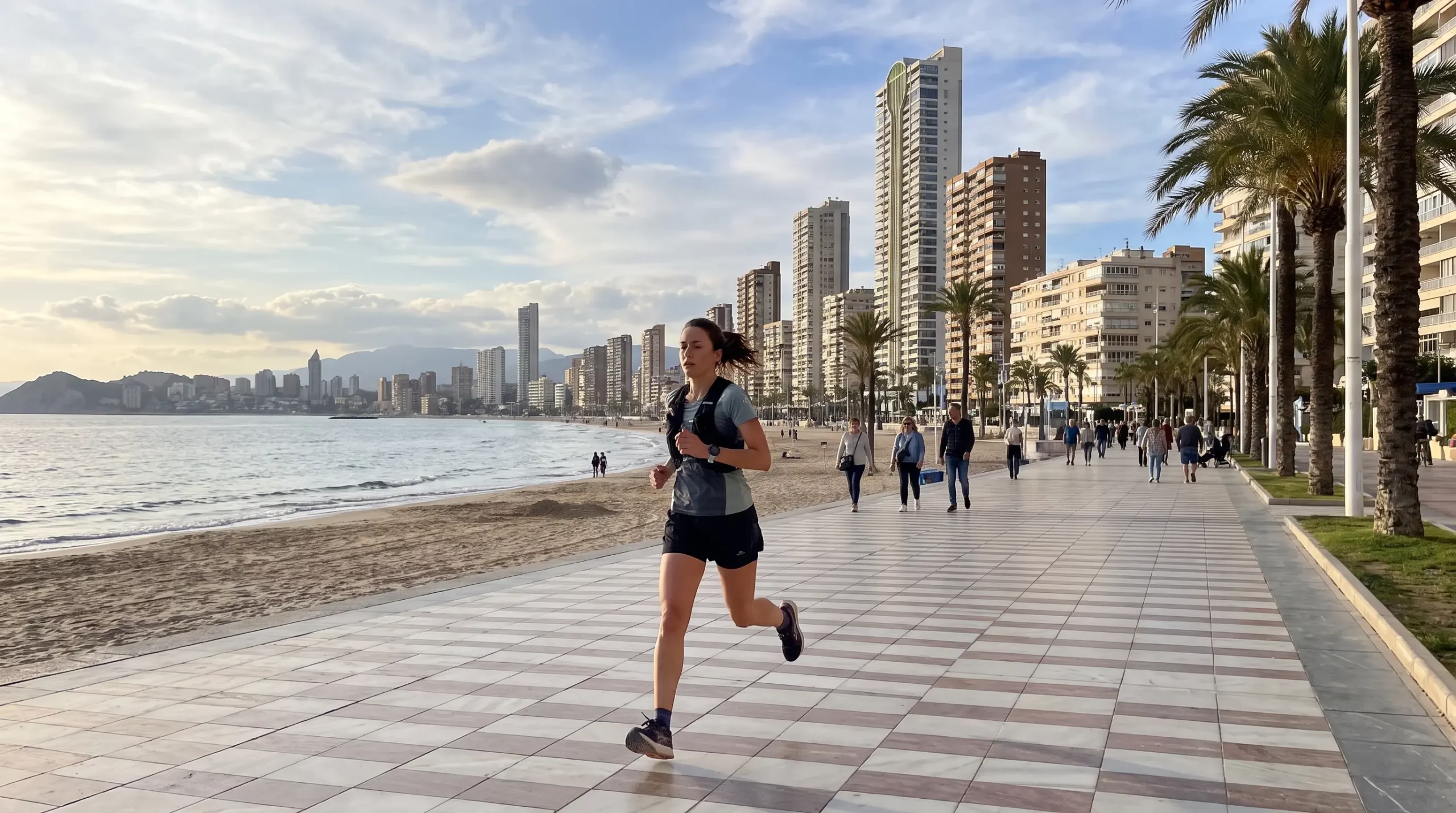
- Flat Promenades and “Blue Carpets”: Several-kilometer-long promenades along the Levante and Poniente beaches are the heart of winter life. They are perfectly flat, curb-free, and equipped with hundreds of benches facing the sea every few dozen meters. Additionally, wooden walkways (the so-called blue carpets) are installed on the beaches themselves, allowing people in wheelchairs or on crutches to reach almost the water’s edge.
- Mobility Assistance System: The old town (Casco Antiguo), situated on a hill, might be inaccessible to seniors if not for a network of modern escalators and public elevators. These connect the lower beach areas with the plaza by the Church of St. James and the famous “Mediterranean Balcony,” eliminating the need for strenuous climbing.
- Electric Scooters – A Local Phenomenon: Benidorm is famous for its vast number of electric mobility scooter rental shops. These are treated as a standard mode of transport; the city features wide sidewalks, ramps for every shop and restaurant, and dedicated parking spaces for these vehicles, giving seniors full independence in moving around.
- Medical Care and Safety: The Costa Blanca region offers a high standard of medical services. Benidorm is home to two large, modern private hospitals (IMED and Hospital de Levante) that employ international staff. In most clinics and pharmacies, it is easy to communicate in English or German, and EHIC card holders are guaranteed access to high-quality public healthcare.
4. Off-Season Attractions: Culture, Dancing, and Nature
February in Benidorm is no time for boredom. The city offers a rich program specifically aimed at the older generation.
- Carnival: February is the time for boisterous Carnival celebrations. Parades in Benidorm are colorful, joyful, and less crowded than those in Rio or Venice, making them more comfortable for seniors.
- Dancing: Many hotels and clubs in the “Rincón de Loix” district organize daily tea dances and evening sessions with live music. For seniors, this is a primary point of social integration.
- Local Excursions: The proximity of picturesque towns like Altea (the white town of artists), Guadalest (a mountain village with a castle), or the Algar waterfalls makes February an ideal time for sightseeing without the exhausting heat.
- Benidorm Palace: One of Europe’s top show venues offers spectacular revues in winter that consistently draw full houses.
5. The Social Aspect: Building Community and Fighting Loneliness
Perhaps the most important reason seniors return to Benidorm every year is not the weather itself, but the sense of belonging to a unique, international community. In winter, the city transforms into a vast, vibrant “senior club” under the open sky, where language barriers fade in the face of shared passions and similar life experiences.
- Café Diplomacy: Local cafés along the promenades and in the charming plazas of the old town become centers of social life. Hours-long bridge, chess, or domino sessions take place here. You can often find national groups—Polish, English, or Scandinavian “coffee mornings”—allowing for the exchange of practical advice on living in Spain, from dentist recommendations to joint shopping trips at local markets (mercadillos).
- Group Activity as Therapy: On Poniente beach every morning, you can observe dozens of organized groups practicing gymnastics, yoga, or Nordic walking. Shared physical effort in the fresh air is a perfect excuse to make new acquaintances. Many of these relationships later move into the private sphere through joint dinners or evening dances.
- An International Cultural Melting Pot: Seniors in Benidorm eagerly participate in “intercambios”—informal language exchanges where, over coffee, they teach each other the basics of Spanish or English. This intellectual stimulation goes hand in hand with a sense of being active and needed.
- Impact on Psychological Well-being: Being part of a dynamic social group drastically reduces the sense of isolation that often plagues older people in their home countries during the long, cold winter. In Benidorm, seniors are not an “invisible” group—they are the heart and soul of the city, which provides them with a huge boost of positive energy, a sense of purpose, and joy for every coming day.
Summary
Winter in Benidorm is much more than just an escape from the frost—it is a conscious lifestyle choice that redefines the concept of aging in Europe. Thanks to a unique microclimate that protects physical health and a vibrant community that looks after mental well-being, this city has become a symbol of “active aging.”
Promoting physical activity in the sun, access to a fresh Mediterranean diet rich in seafood and local vegetables, and the lack of urban barriers allow seniors to regain their vigor and joy of life. Benidorm proves that with the right infrastructure and social attitude, the autumn of life does not have to be gray and lonely. On the contrary—thanks to the sun, affordable prices, and human kindness, it can become the most colorful, joyful, and active season of the year, resembling a second youth rather than a time of slowing down.