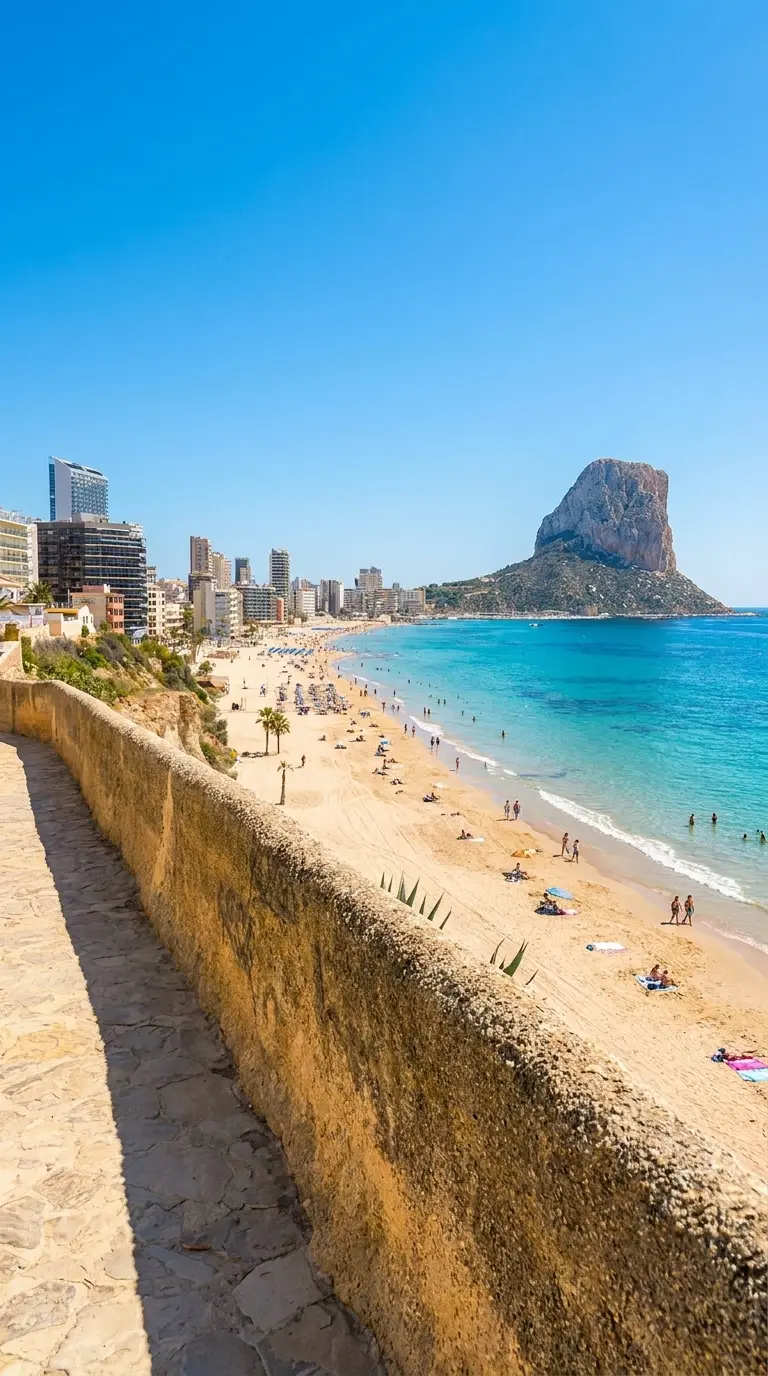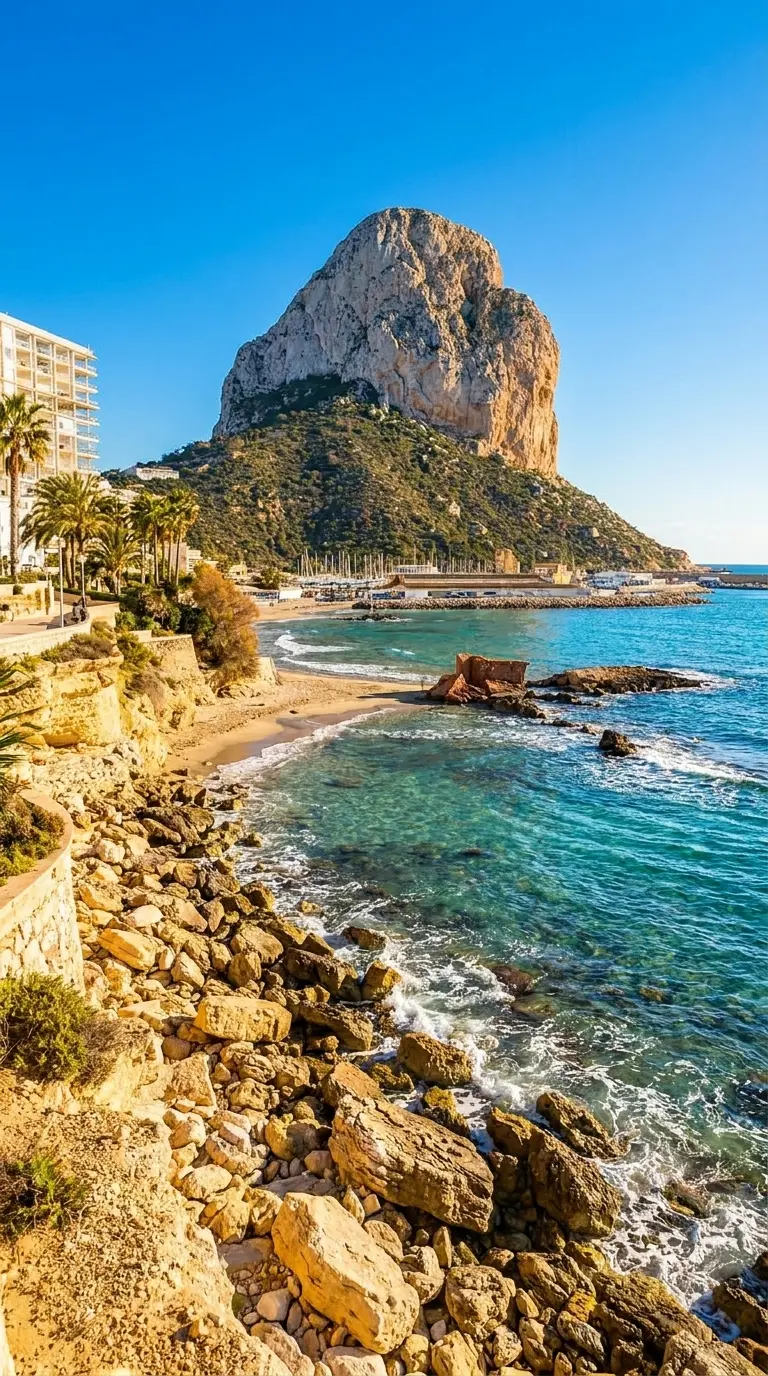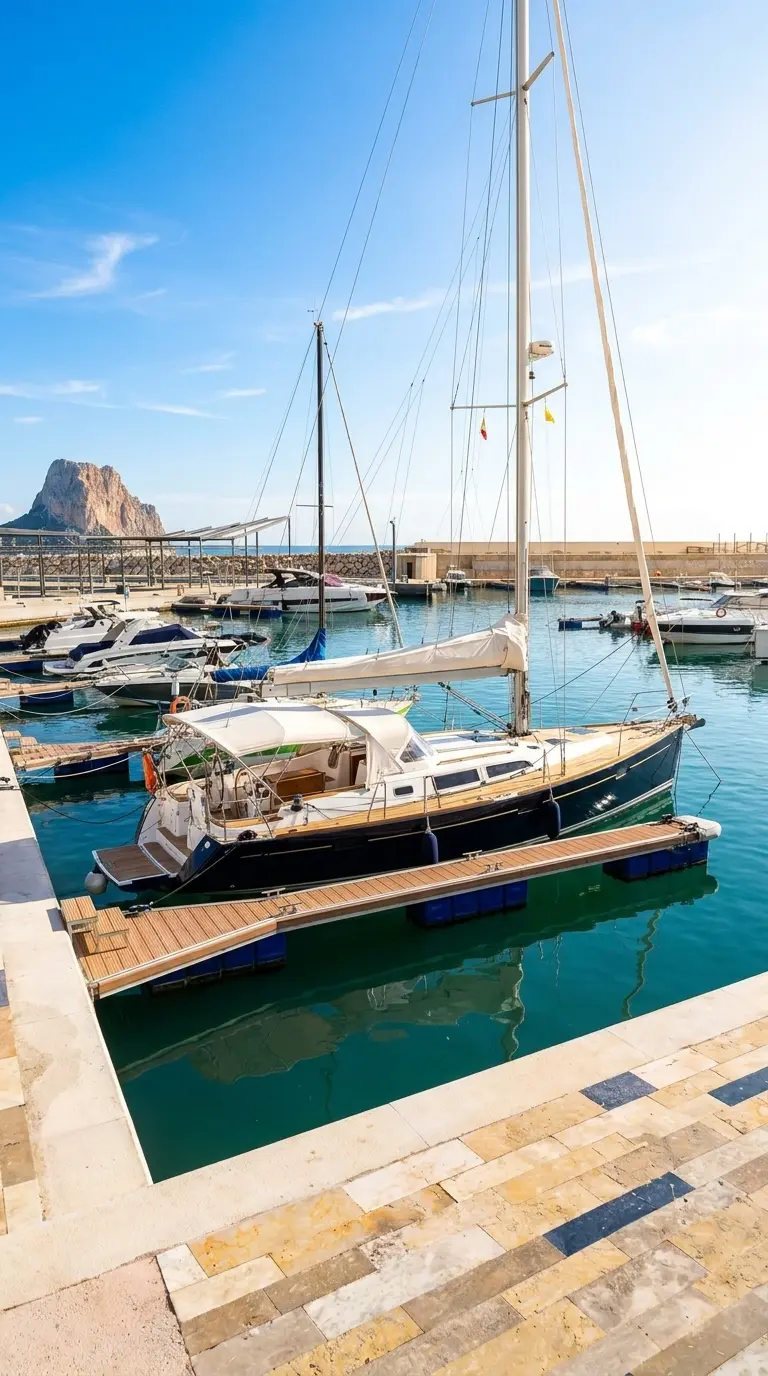
If there is one place that flawlessly defines the skyline of the Alicante province coast, it is undoubtedly Calpe. This is a town that escapes simple definitions in a fascinating way – it is here that the power and majesty of untouched nature meet in a bold dialogue with modern, avant-garde architecture and deep-rooted fishing history. As you approach Calpe, she greets you first – a gigantic limestone rock rising straight from the turquoise waters of the Mediterranean, serving as the eternal guardian of this region. However, Calpe is much more than just a postcard view to be captured from a car window on the N-332 road.
This town has two souls. On one hand, it offers luxury relaxation in the shadow of modern skyscrapers that reflect in the water’s mirror; on the other, it invites you into the labyrinth of narrow streets in the Old Town, where time seems to flow to the rhythm of fishing boats returning to the port. Whether your goal is adrenaline on a steep trail, culinary delights in port restaurants serving the freshest seafood, or simply blissful peace on golden sand – this guide will help you discover all the secrets of Calpe, from its most famous peaks to hidden coves tucked between cliffs.
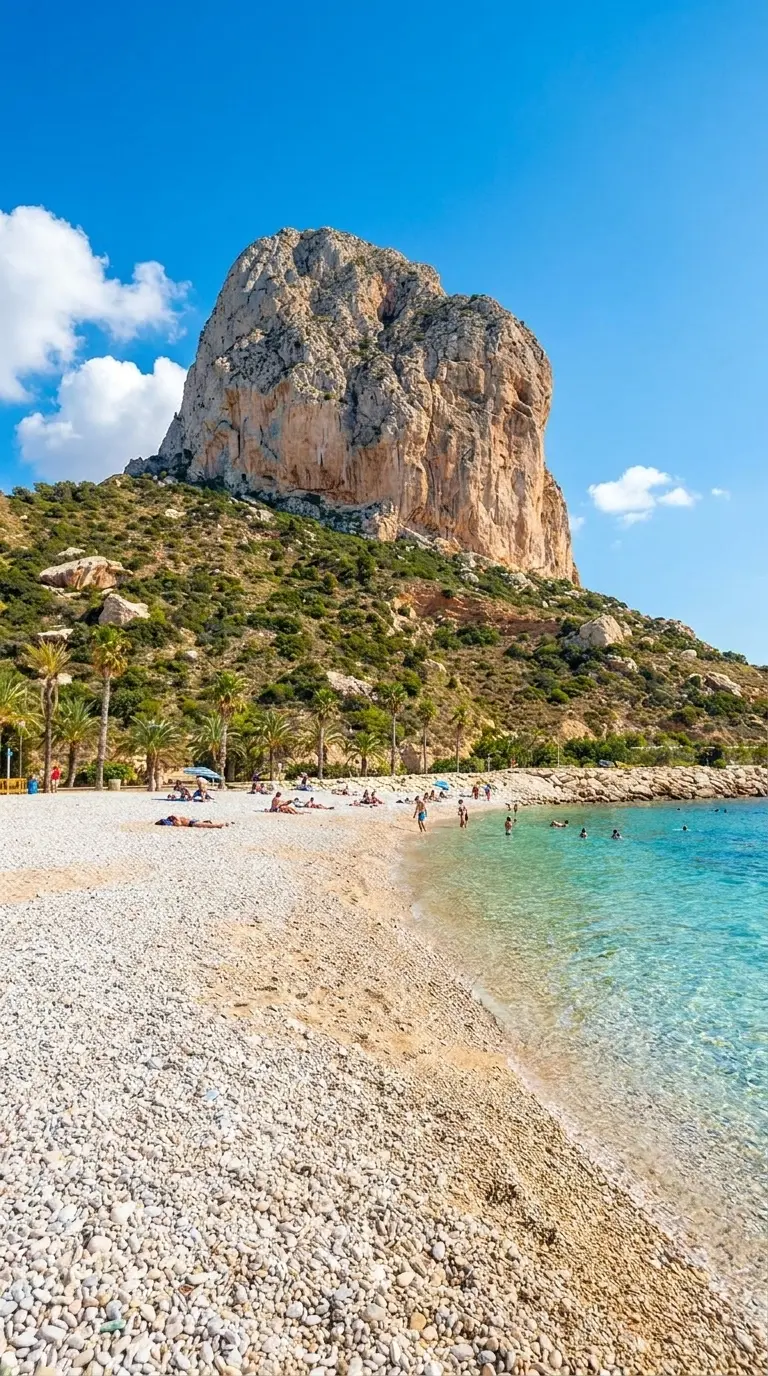
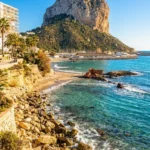
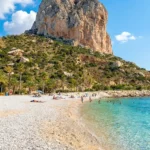
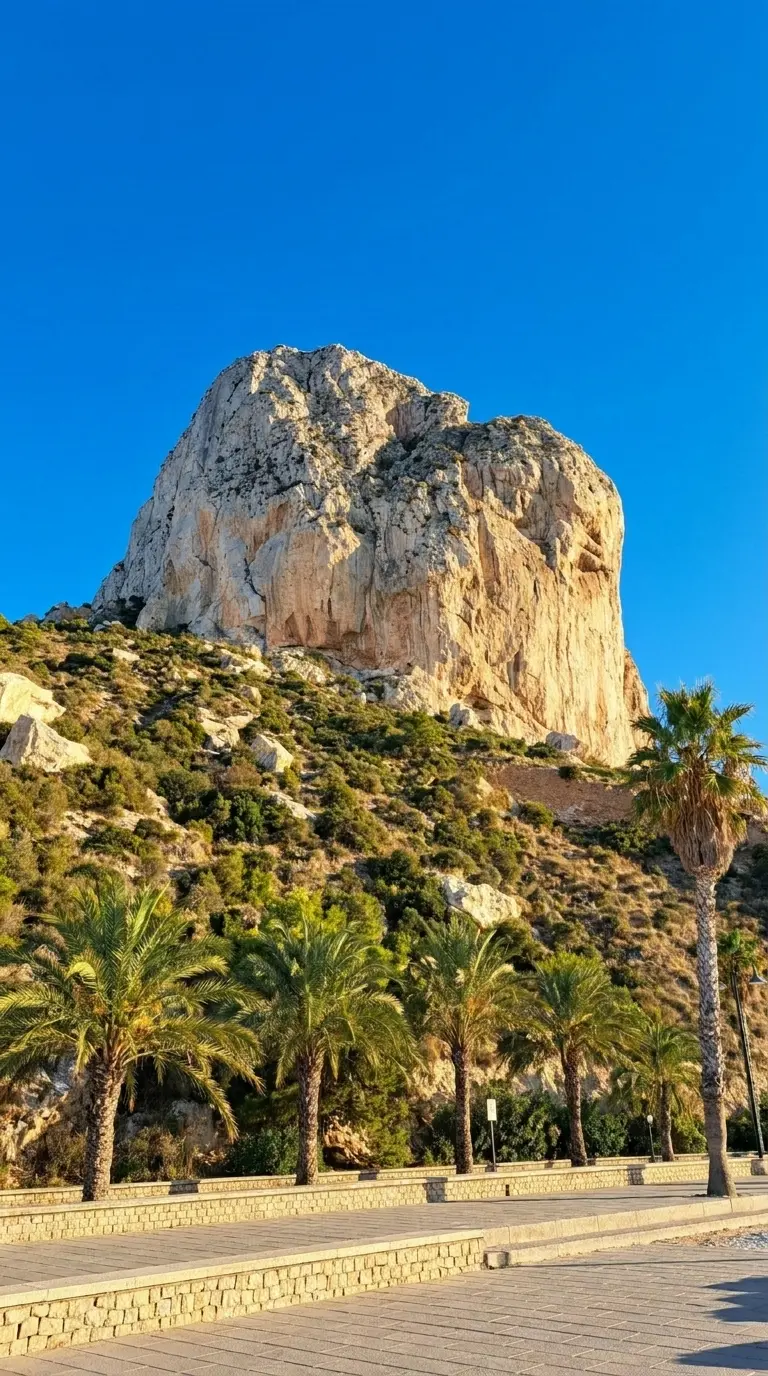
One cannot talk about Calpe without mentioning the Peñón de Ifach. This colossal limestone rock rises to a height of 332 meters above sea level and is connected to the mainland only by a narrow isthmus. It is the smallest National Park in Spain, and at the same time, one of the most fascinating trekking spots in the entire Mediterranean basin.
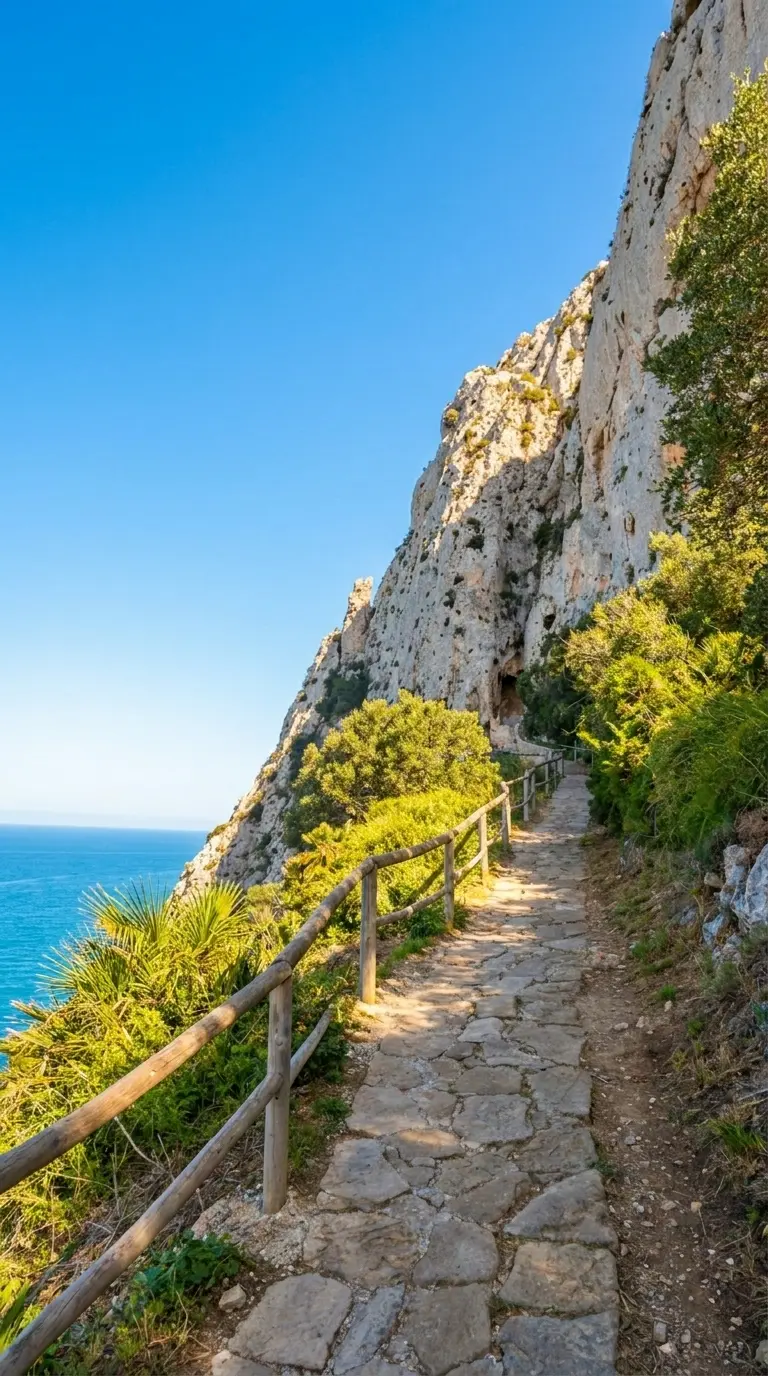
Hiking to the summit: A trail of two worlds. The expedition is divided into two distinct stages. The first, relatively easy and accessible to everyone, leads along a wide, paved path to a viewpoint before the tunnel. However, the real adventure begins in the tunnel itself – a dark, slippery passage carved into the heart of the rock, polished by thousands of feet. Beyond the tunnel, the trail becomes demanding: the path narrows, leads over precipices, and requires navigating boulders that have become smooth and treacherous over the years. The view from the top of the entire coastline, from the towers of Benidorm to the Cape of Moraira, is a reward that stays in the memory for a long time.
Important information on reservations. Due to its status as a protected area and concern for tourist safety, the number of people on the trail is limited to 300 per day. It is mandatory to book a free ticket online in advance on the park’s official website. In the summer season, it is worth doing this a few days in advance, as tickets disappear instantly. Park rangers check reservations at the starting point.
Kingdom of gulls and endemic flora. Peñón de Ifach is home to over 80 species of birds, including the very proud (and sometimes loud) Yellow-legged gulls that nest on the steep cliffs. You can also find unique plant species here, such as the Ifach campion (Silene hifacensis), which occurs nowhere else in the world.
Climbing for professionals. The southern face of the rock consists of vertical, nearly 300-meter cliffs that are a legendary arena for climbers from all over Europe. There are over a dozen routes of varying difficulty, offering incredible exposure and direct views of the blue ocean.
One of Calpe’s most extraordinary attractions is the salt lake Las Salinas. This place is unique on a global scale – it is rare for such a valuable ecosystem to be located in the very center of a densely built-up resort. This lagoon is a remnant of the ancient salt industry, which has been the economic foundation of the region since Roman times.
Salt history and Roman roots. Salt mining in Calpe has a tradition dating back to the 2nd century AD. Salt was essential for the operation of the nearby fish salting factory (Baños de la Reina), the remains of which can still be admired today. Although commercial exploitation ended in 1988, Las Salinas has survived as a protected wetland area of enormous biological importance.
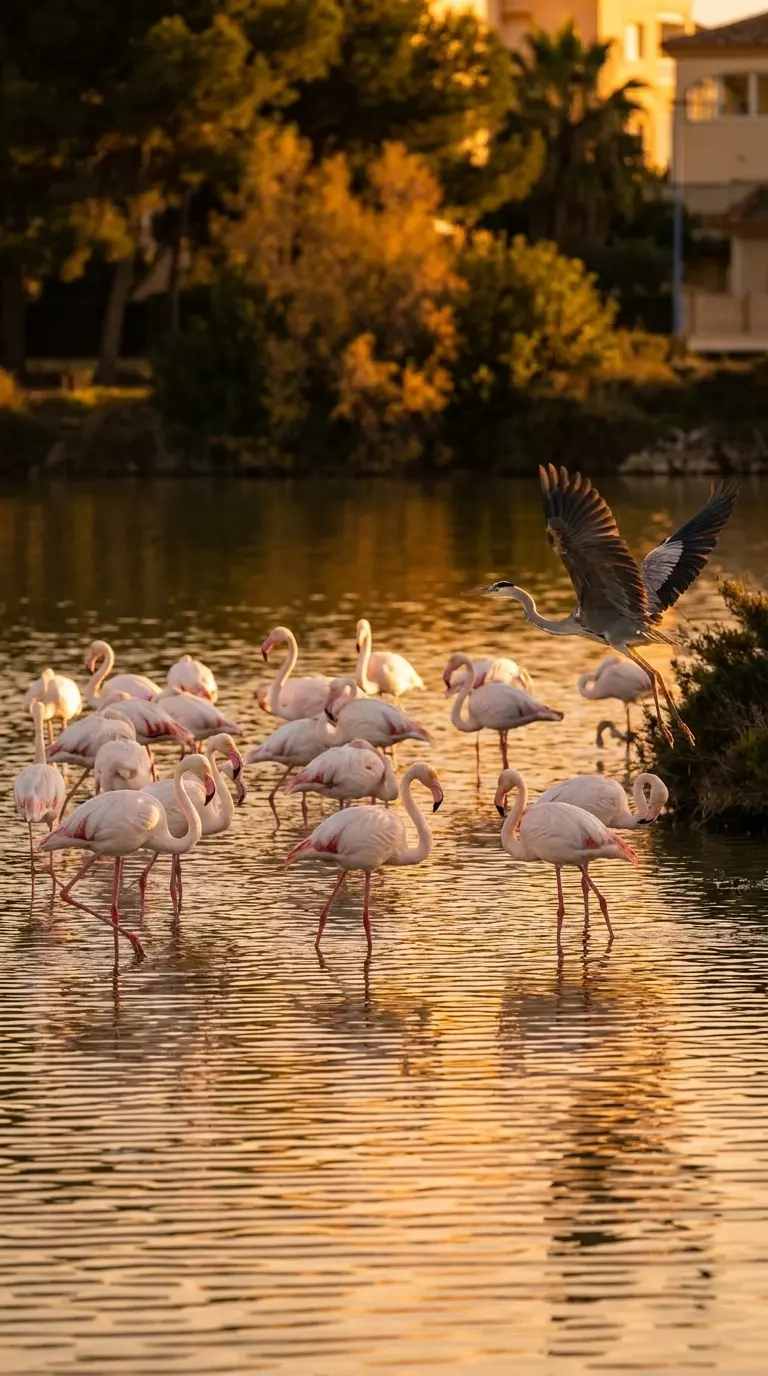
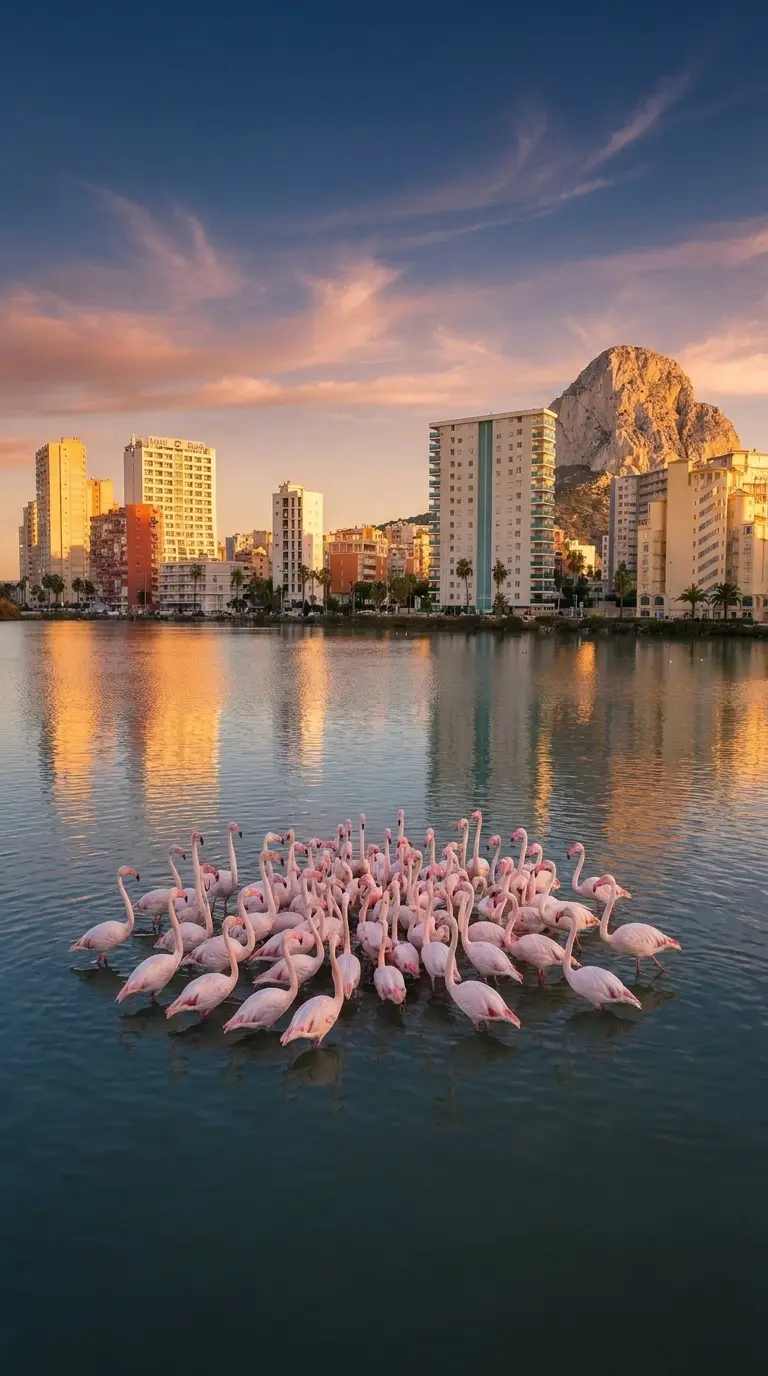
Pink Flamingos and winged inhabitants. These are undoubtedly the biggest stars of the lake. For most of the year, you can observe large flocks of pink flamingos (Phoenicopterus roseus) wading in the shallow waters in search of crustaceans. However, Las Salinas is home to over 170 species of birds. With a bit of patience, you will spot black-winged stilts, avocets, and little egrets. The lake is a key stop on the bird migration route between Europe and Africa.
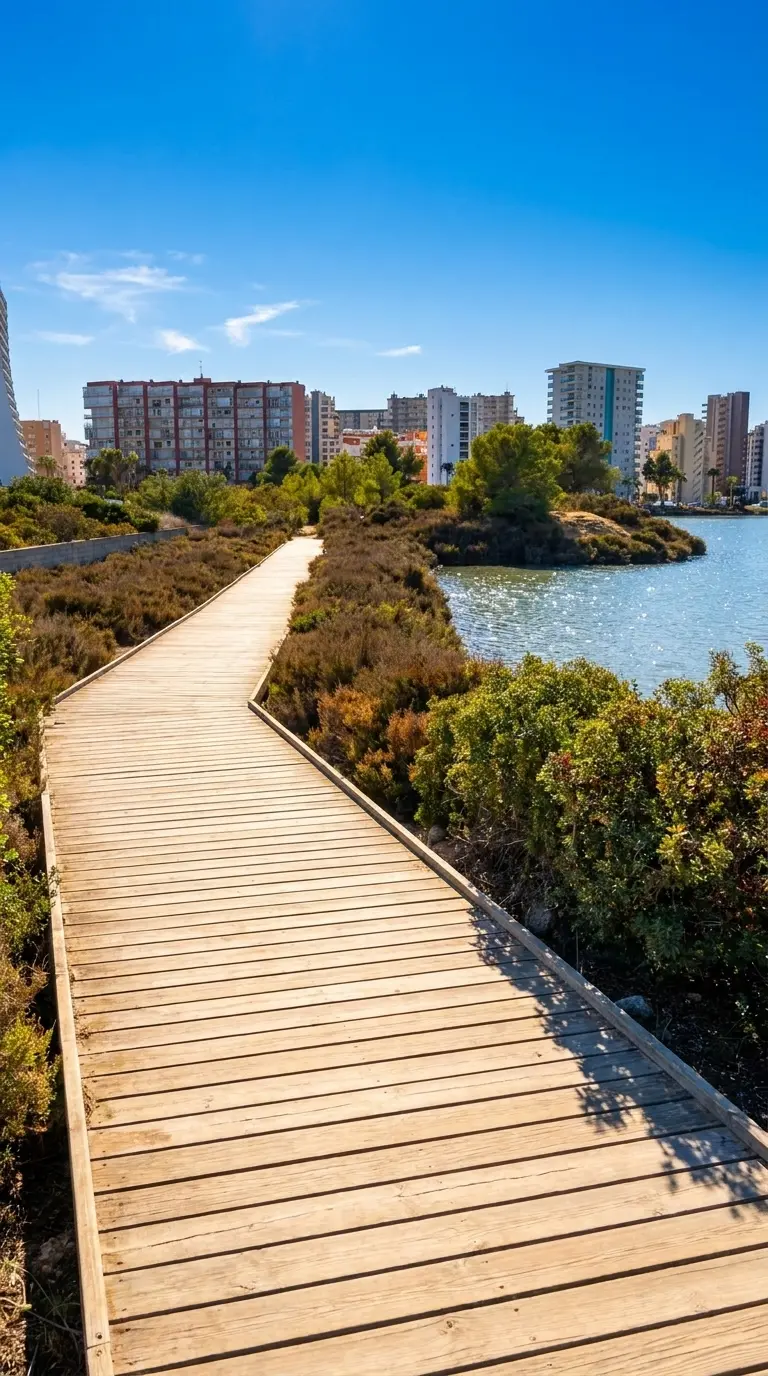
A walk among contrasts. Wooden walkways and observation points have been designated around the lake, allowing for close contact with nature without disturbing the animals’ peace. This is where you will take the most surreal photos in Calpe – pink birds and a crystalline water surface against the backdrop of powerful, modern skyscrapers reaching for the sky. The best time to visit is at sunset, when the light paints the lake in intense shades of pink and gold.

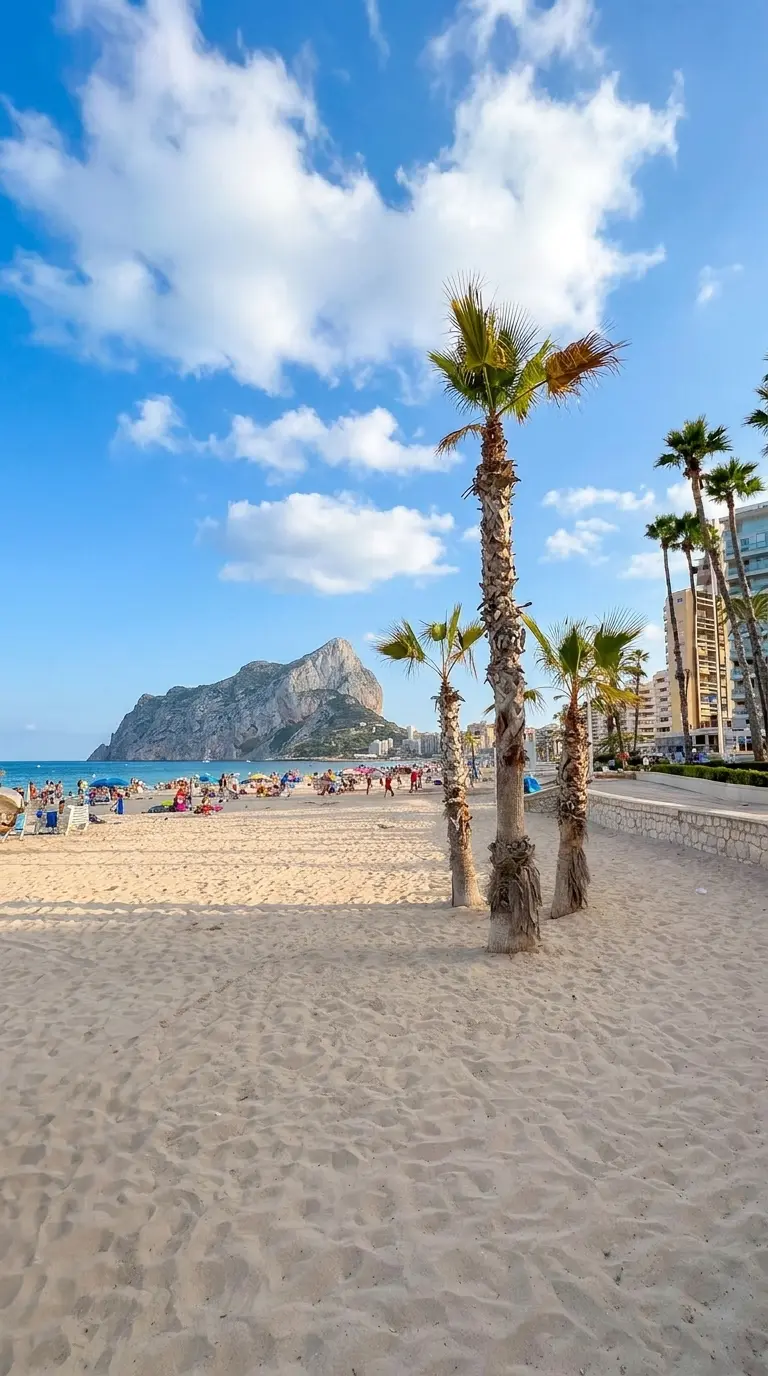
Calpe is famous for two main, wide sandy beaches separated by the Ifach rock. Both hold Blue Flag status.
Playa del Arenal-Bol: The urban salon under the palms. This is the most representative beach in the city, stretching south of the rock for over 1 km. It is characterized by fine, silky gold sand. This is where life teems from morning until late at night. The modern Infanta Elena promenade, paved with stone slabs, offers countless cafes, ice cream parlors, and shops. The beach is fully adapted for people with limited mobility and has numerous playgrounds for children, making it a family favorite.
Playa de la Fossa (Arenal-Llevant): Panoramic tranquility. Located north of Peñón de Ifach, it offers a completely different perspective. It is sheltered from the winds, making the water exceptionally calm and transparent. Its greatest asset is the spectacular view of the rugged northern face of the rock, which seems even more powerful from here. The promenade at this beach is slightly quieter, ideal for a romantic dinner by the sound of the waves.
Cala del Morelló and Baños de la Reina. This is a small sandy cove that hides an archaeological treasure. Directly by the water are the “Queen’s Baths” – Roman pools carved into the rock, where fish were formerly bred (pescarius). Today you can swim in them, which gives the incredible impression of bathing in an ancient aquarium.
Cala El Racó: A snorkeler’s paradise. Located at the very foot of the southern face of Peñón de Ifach, right next to the port. This is a pebble beach, so it is worth bringing protective footwear. However, the water here has an amazing sapphire color, and visibility below the surface is phenomenal. It features a unique underwater trail (Senda Submarina) with information plaques placed on the bottom describing the local marine flora and fauna.
Although Calpe’s silhouette is dominated by modernity, it is in its historical center and unique architectural projects that the town’s greatest aesthetic value is hidden.
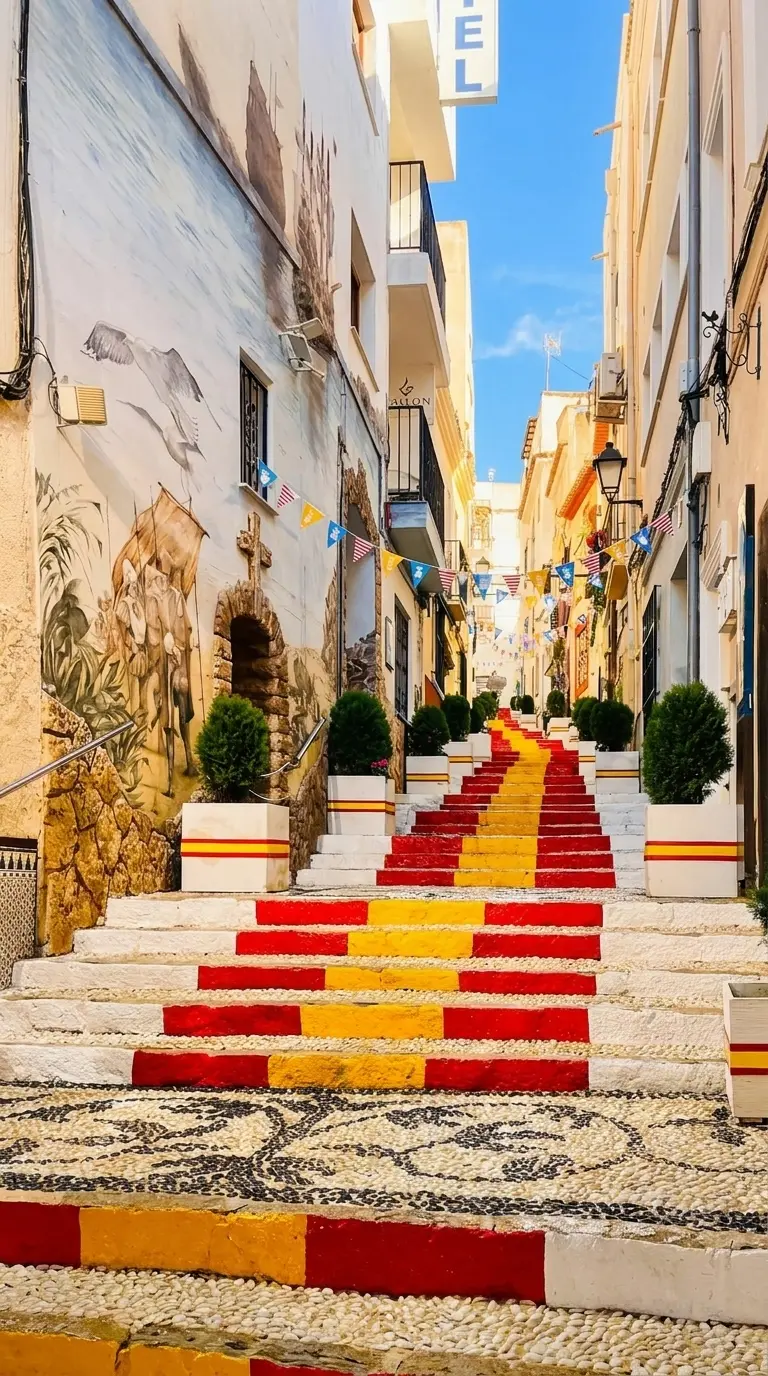
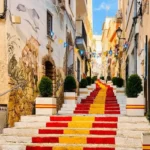
Casco Antiguo: A labyrinth of colors and history. A walk through Calpe’s old town is a journey through time. The heart of the district is Calle de Puchalt – the famous stairs painted in the colors of the Spanish flag, which have become a symbol of local patriotism and a favorite spot for photographers. Narrow streets are decorated with ceramic mosaics depicting the city’s history and hundreds of pots with blooming geraniums. It is worth stopping at the Torreó de la Peça, a fragment of the old defensive walls that protected Calpe from pirate attacks, and at the Plaza de la Villa, where modern mosaic art meets the neo-Gothic architecture of the church of Nuestra Señora de las Nieves.
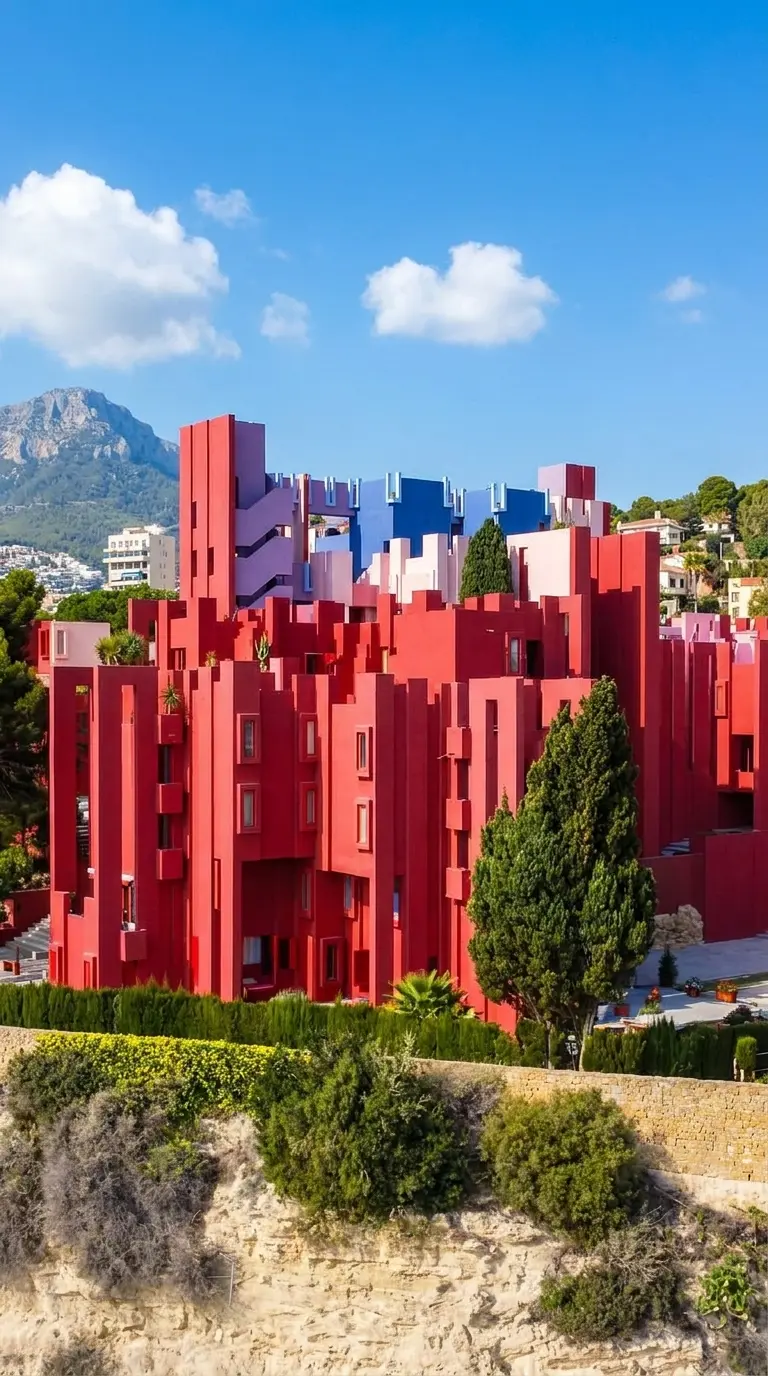
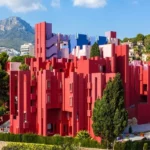
La Muralla Roja: A Postmodernist Manifesto. This building is an absolute “must-see” for any design fan. Designed by the legendary Ricardo Bofill in 1973, the apartment complex is a reinterpretation of the Arab kasbah and Mediterranean architecture. Geometric stairs, bridges, and terraces painted in shades of intense pink, red, and various blue tones create a mesmerizing contrast with the blue of the sky and sea. Remember, however, that the building is private residential property – it can be admired from the outside (ideally from a nearby cliff) or from sea level. To go inside, it is necessary to rent an apartment there.
Other Bofill works in Calpe. La Muralla Roja is not everything. In the same La Manzanera neighborhood, there are other avant-garde Bofill projects: Xanadú (a building with a shape inspired by the Ifach rock and trees) and El Anfiteatro (a complex in the form of a classic amphitheater with a swimming pool in the central part). Together they create a globally unique laboratory of social architecture.
Calpe remains true to its fishing roots. Every afternoon (around 17:00), the famous fish auction (Lonja de Calp) takes place in the port, which tourists can observe from a special gallery.
Port restaurants and Peix de Calp: Many restaurants around the port serve the freshest seafood marked with the “Peix de Calp” quality certificate.
Mariscada and Arroz del Senyoret: Be sure to try the Mariscada – a gigantic platter of grilled seafood. If you prefer rice, choose Arroz del Senyoret (Gentleman’s Rice). The name comes from the fact that all the seafood in this dish is already peeled from shells and carapaces, so the diner does not have to get their hands dirty – it is the essence of luxury in a simple, fisherman’s version.
Pick your fish: Many establishments display refrigerated counters filled with ice and fish in front of their entrances. You can personally point to a specific piece that will be prepared for you on the grill (a la plancha).
Getting there: The scenic TRAM and highways. Calpe lies on the N-332 national road and the AP-7 highway (now toll-free). However, if you have time, choose the TRAM (Line L9) from Benidorm. This is one of the most beautiful railway routes in Spain – the tracks run through tunnels carved into the rocks right over precipices, offering unforgettable sea views.
Weather: The Calpe microclimate. The best time to visit is May, June, and September (temperatures around 25 degrees Celsius). In July and August, temperatures often exceed 30 degrees Celsius, and the town is most crowded. In winter, Calpe is popular with professional cyclists from all over the world due to the mild climate and great routes in the nearby mountains.
Safety on the trail: Footwear is key. If you plan to climb Peñón de Ifach, forget about sandals or flip-flops. The limestone rocks, especially in and after the tunnel, are polished by thousands of feet and are as slippery as ice even on a dry day. Solid sports shoes with good grip are an absolute necessity – park rangers have the right to turn away people in inappropriate footwear for their own safety.
Calpe is a town that combines the best of the Costa Blanca: the majesty of nature, the comfort of modern beaches, and the charm of Spanish tradition. It is an ideal base for active tourists who want to conquer a mountain peak in the morning, relax on golden sand in the afternoon, and eat dinner in the shadow of one of the world’s most iconic rocks in the evening.
If you are looking for a change from the sandy but less spectacular landscapes of other resorts, Calpe will certainly not disappoint you.
Select a route to see the estimated taxi fare